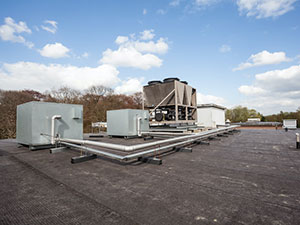
Built up roofing is one of the longest-standing roofing systems used on commercial buildings, particularly on flat roofs. Rather than relying on a single membrane, built up roofing is constructed from multiple layers that work together to provide waterproofing, durability, and long-term performance.
At JM Roofing Solutions, we work with built up roofs across Grand Rapids, MI, where large roof areas, seasonal weather changes, and foot traffic place added demands on commercial roofs. Understanding how built up roofs are constructed and how they functions helps property owners evaluate whether this system is appropriate for their building and long-term maintenance goals. For questions about built up roofing systems or inspections, our team can be reached at (269) 361-8305.
Understanding Built Up Roofing
Built up roofing, often referred to as BUR, is defined by its layered construction. Instead of one continuous membrane, the system is assembled using alternating layers of bitumen and reinforcing fabrics. These layers are built up over the roof deck to create a thick, redundant waterproof barrier.
This layered design allows built up roofs to:
- Provide multiple lines of defense against water intrusion
- Distribute stress across the roof surface
- Tolerate foot traffic better than many single-ply systems
- Offer proven performance over decades of use
The redundancy of the system is one of the main reasons built up roofing continues to be used on large commercial buildings.
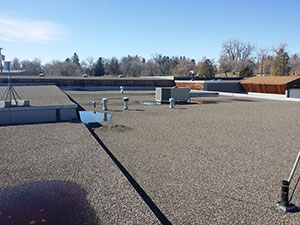
Core Components Used in Built Up Roofing Systems
A built up roofing system is made up of several key components, each with a specific role in roof performance. While configurations can vary, most systems include a roof deck, insulation, multiple ply sheets, and a protective surface layer.
Common built up roof components include:
- Base sheets attached to the roof deck
- Ply sheets embedded in bitumen
- Hot asphalt or cold-applied bitumen as the bonding agent
- A gravel surface or mineral cap sheet for protection
Each layer strengthens the system and contributes to long-term durability.
How Built Up Roofing Is Installed on Commercial Roofs
Built up roofing installation is a methodical process that requires careful sequencing. After the roof deck and insulation are prepared, layers are installed one at a time to ensure proper adhesion and coverage.
The installation process typically includes:
- Preparing and cleaning the roof surface
- Installing insulation and base sheets
- Applying bitumen and embedding ply sheets
- Repeating layers to achieve the required thickness
- Adding a protective surface layer
Proper installation is critical, as gaps or inconsistencies between layers can compromise system performance.
Why Built Up Roofing Performs Well on Flat Roofs
Flat and low-slope roofs require roofing systems that can manage standing water, temperature changes, and ongoing exposure. Built up roofs perform well in these environments because their thickness and layered construction resist punctures and slow water movement.
The system’s weight and durability also help it remain stable in high-wind conditions, making it a practical choice for many large commercial structures.
Maintenance Considerations
While built up roofing is durable, it still requires routine maintenance. Inspections help identify surface wear, displaced gravel, or localized damage before problems spread through the system.
Typical built up roof maintenance includes:
- Inspecting seams and transitions
- Monitoring drainage areas
- Redistributing gravel where needed
- Addressing surface damage early
Consistent maintenance helps extend the service life of the roof and protect the building below.
Situations Where Built Up Roofing May Not Be the Best Option
Built up roofing is not ideal for every building. Its weight may require structural evaluation, and installation can be more disruptive than lighter systems. Buildings with steep slopes or limited structural capacity may require alternative roofing systems.
Understanding these limitations helps property owners make informed roofing decisions.
Evaluating Built Up Roofing for Long-Term Commercial Use
In Grand Rapids, MI, commercial roofs must withstand rain, snow, and freeze-thaw cycles year after year. At JM Roofing Solutions, evaluating built up roofing means looking at building structure, roof usage, drainage design, and long-term maintenance expectations. When properly installed and maintained, built up roof remains a reliable option for many commercial buildings. For questions about built up roof performance or suitability, JM Roofing Solutions can be reached at (269) 361-8305.
FAQ
How many layers are used in built up roofing systems?
Most built up roofs use three to five layers, depending on design requirements and building use.
Is built up roofing still commonly used today?
Yes. While newer systems exist, built up roof is still widely used on large commercial buildings due to its durability and proven performance.
Can built up roofing be installed over an existing roof?
In some cases, this depends on the condition of the existing roof, structural capacity, and local code requirements.
Does a built up roof handle foot traffic well?
Compared to many single-layer systems, built up roof generally tolerates foot traffic better due to its thickness and layered construction.