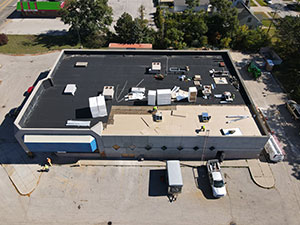
PVC roofing is widely used on commercial buildings because of its durability, chemical resistance, and heat-welded seams. However, like any roofing system, a PVC roof can develop issues over time if it is exposed to movement, improper installation, or environmental stress. Understanding common PVC roofing problems and how professionals diagnose them helps property owners respond early and avoid unnecessary damage.
At JM Roofing Solutions, we inspect and evaluate PVC roofs across Grand Rapids, MI, where temperature swings, moisture, and rooftop activity all influence roof performance. Knowing what to look for, and how issues are properly identified, is a key part of protecting a commercial roof investment. For inspection questions, our team can be reached at (269) 361-8305.
Common PVC Roofing Problems and Diagnosis
One of the challenges with PVC roofing is that problems often develop beneath the surface before leaks appear inside the building. The membrane may look intact while seams, flashings, or attachment points are slowly weakening.
PVC roof issues often go unnoticed because:
- Heat-welded seams can fail internally before separating
- Moisture may migrate under the membrane
- Small punctures may not leak immediately
- Stress points are often hidden at transitions
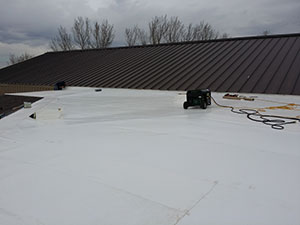
Professional inspections focus on identifying these early warning signs rather than waiting for interior damage.
Seam-Related Issues in PVC Roofing Systems
Seams are one of the most critical components of a PVC roof. They are heat-welded to form a continuous waterproof layer, but improper welding or long-term stress can compromise their integrity.
Common seam problems include:
- Incomplete welds from installation
- Welds weakened by repeated thermal movement
- Separation caused by building movement
- Contamination during the original welding process
Professionals diagnose seam issues using visual inspection, probing tools, and targeted testing to confirm weld strength.
Punctures and Membrane Damage on PVC Roofing
PVC roofing membranes are durable, but they can still be punctured by dropped tools, sharp debris, or repeated foot traffic. These punctures may be small and difficult to spot without a close inspection.
Puncture damage often occurs:
- Around rooftop equipment
- Along service paths
- Near drains or scuppers
- At areas with frequent maintenance access
Technicians inspect these zones carefully to identify damage before it allows water intrusion.
Flashing Failures Around Penetrations and Edges
Flashing is a common failure point on PVC roofing systems. Penetrations such as vents, pipes, and HVAC curbs introduce movement and stress that can affect membrane attachment.
Typical flashing issues include:
- Cracking or pulling away from vertical surfaces
- Poor adhesion at corners or transitions
- Improper detailing during installation
- Sealant deterioration over time
Diagnosing flashing problems requires close inspection of attachment points and transitions where movement is most likely.
Ponding Water and Drainage Problems Affecting PVC Roofing
While PVC roof membranes tolerate moisture well, standing water can accelerate wear and expose underlying issues. Ponding water often indicates a drainage or slope problem rather than a membrane defect.
Professionals assess:
- Drain performance
- Roof slope consistency
- Debris accumulation
- Structural deflection
Addressing drainage issues is essential to prevent premature membrane stress.
Shrinkage and Thermal Stress in PVC Roofing
PVC roof expands and contracts as temperatures change. Over time, this movement can place stress on seams, flashings, and attachments.
Signs of thermal stress include:
- Wrinkling near seams
- Tension at penetration flashings
- Membrane pulling away from edges
- Fastener or plate movement beneath the membrane
Experienced inspectors evaluate whether movement is within acceptable limits or contributing to system failure.
How Professionals Diagnose PVC Roofing Problems
Effective PVC roof diagnosis combines visual inspection with system knowledge. Professionals evaluate how the roof was installed, how it has aged, and how environmental factors affect its performance.
A proper diagnosis includes:
- Reviewing installation methods
- Identifying stress patterns
- Checking seams and flashings
- Evaluating drainage behavior
- Assessing repair history
Accurate diagnosis ensures repairs address root causes rather than surface symptoms.
PVC Roofing for Ongoing Performance
In Grand Rapids, MI, PVC roof systems must perform through rain, snow, and seasonal temperature changes. At JM Roofing Solutions, diagnosing PVC roofing problems involves understanding how the membrane, seams, flashings, and drainage work together as a system. Early detection and professional evaluation help prevent small issues from becoming costly repairs. For questions about PVC roofing inspections or system concerns, JM Roofing Solutions can be reached at (269) 361-8305.
FAQ
Can PVC roofing problems be repaired without replacing the entire roof?
In many cases, yes. Isolated seam, flashing, or puncture issues can often be repaired if the overall system is still in good condition.
Do PVC roofing seams fail more often than the membrane itself?
Seams are more likely to develop issues because they experience concentrated movement and stress compared to open membrane areas.
Is ponding water always a sign of PVC roofing failure?
Not necessarily. Ponding water often indicates drainage or slope issues rather than membrane defects, but it should still be evaluated.
How often should PVC roofing systems be inspected?
Most commercial PVC roofing systems benefit from inspections at least twice per year and after major weather events.