Proper drainage is one of the most critical factors in the performance and lifespan of flat commercial roofs. Large commercial and industrial buildings in Grand Rapids, MI face unique drainage challenges due to roof size, weather exposure, and building use. At JM Roofing Solutions, we work with property owners, facility managers, and industrial operators to design flat roofing systems that manage water effectively and reduce long-term risk. For professional flat roofing contractors, call JM Roofing Solutions at (269) 361-8305.
How Flat Roofing Contractors Plan Drainage
Flat roofs are designed with minimal slope, which means water does not naturally shed as quickly as it does on pitched systems. Without careful planning, standing water can lead to membrane deterioration, structural stress, and interior leaks. Understanding how flat roofing contractors approach drainage design helps commercial property owners make informed decisions about roof installation and performance.
On large commercial and industrial roofs, even small drainage issues can quickly escalate. Ponding water increases the weight load on the roof structure and accelerates wear on roofing materials. Over time, this can compromise insulation, deck components, and interior spaces.
For warehouses, manufacturing plants, and distribution centers, poor drainage also increases operational risk. Water intrusion can damage equipment, inventory, and production areas. Flat roofing contractors prioritize drainage because effective water management directly impacts roof longevity, safety, and business continuity.
Roof Size and Layout
Drainage planning begins with a thorough evaluation of the roof’s size, layout, and existing slope. Large commercial roofs often include multiple sections, penetrations, and elevation changes that affect how water flows.
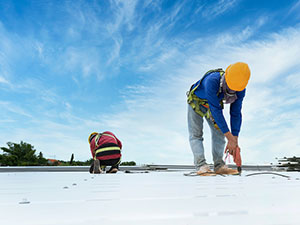
Flat roofing contractors assess:
- Overall roof square footage and section layout
- Natural low points where water may collect
- Structural slope or tapered insulation opportunities
- Locations of rooftop equipment and walkways
This evaluation allows contractors to design drainage systems that move water efficiently across long distances without creating stress points or weak areas.
Common Drainage Systems
Flat roofing contractors select drainage systems based on building design and water volume requirements. Commercial and industrial buildings often require more robust solutions than smaller structures.
Common drainage options include:
- Internal roof drains, which channel water through the building and are ideal for large roofs
- Scuppers, typically used on perimeter walls to direct water off the roof
- Gutters and downspouts, sometimes used on smaller commercial buildings or specific roof sections
In many cases, contractors use a combination of systems to ensure redundancy and prevent backup during heavy rainfall or snow melt.
Tapered Insulation
Tapered insulation plays a major role in modern flat roof drainage design. Instead of relying solely on structural slope, contractors install insulation systems that guide water toward drains.
Benefits of tapered insulation include improved water flow, reduced ponding areas, and enhanced energy efficiency. For large commercial roofs, tapered insulation allows precise control over drainage paths, even when the building structure itself is flat.
Flat roofing contractors carefully design insulation layouts to ensure water moves consistently toward drainage points without creating uneven surfaces or insulation gaps.
Managing Drainage Around Equipment
Commercial and industrial roofs often contain HVAC units, exhaust fans, skylights, and access walkways. These features can obstruct water flow if not properly planned.
Contractors account for:
- Drainage paths around mechanical units
- Raised curbs and penetrations that can trap water
- Safe water flow near walkways and service areas
By integrating drainage planning with equipment placement, flat roofing contractors reduce the risk of localized ponding and membrane damage around high-traffic roof zones.
Weather Considerations
In Grand Rapids, MI, flat roofs must handle heavy rain, snow accumulation, and freeze thaw cycles. Drainage systems must be sized to accommodate sudden water volume from snow melt and spring storms.
Flat roofing contractors consider:
- Drain size and placement for peak water flow
- Protection against ice blockage at drains
- Long-term performance under temperature fluctuations
Designing drainage with local climate in mind helps prevent seasonal damage and reduces the need for emergency repairs.
Experienced Flat Roofing Contractors
Effective drainage planning requires experience, technical knowledge, and a clear understanding of commercial roofing systems. At JM Roofing Solutions, we evaluate roof structure, drainage capacity, and operational needs to design flat roofing systems that perform reliably over time.
For commercial and industrial property owners in Grand Rapids, MI, call (269) 361-8305 to speak with flat roofing contractors who understand how proper drainage protects your building, assets, and operations.
FAQ
Why is drainage more important on flat commercial roofs?
Flat roofs drain slowly, so standing water can cause structural and membrane damage if not managed properly.
What drainage systems are best for large commercial roofs?
Internal drains combined with tapered insulation are commonly used for large commercial buildings.
Can poor drainage shorten roof lifespan?
Yes, standing water accelerates material breakdown and increases repair frequency.
Do rooftop units affect drainage design?
Yes, equipment placement must be planned to avoid obstructing water flow.