
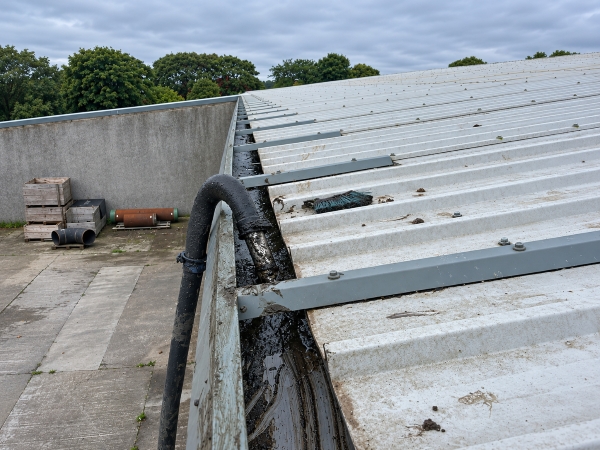
Commercial gutters in Battle Creek need to handle rain, snowmelt, freezing conditions and seasonal debris. Problems that are minor in dry weather can become more visible when outlets are restricted, water refreezes or drainage demand increases. This guide explains what winter and spring do to commercial gutters, what to check each season and what to settle in writing before repair or replacement.
JM Roofing Solutions provides commercial gutter work along with commercial roof repair and maintenance services for Michigan properties. This article focuses on how seasonal conditions affect gutter drainage and what a repair or replacement scope should document.
What Michigan Winters Do to Commercial Gutters
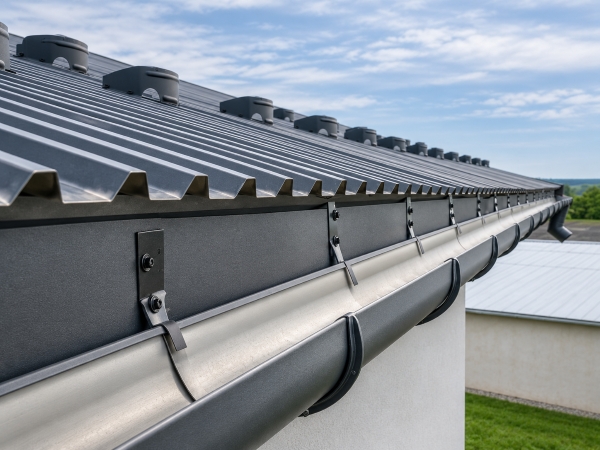
Gutters and downspouts carry water away from the roof edge, walls and foundation. In winter, water can freeze in the channel or at a downspout outlet. Ice accumulation can add weight to the system, while repeated freezing and thawing can expose weaknesses in joints, seams, fasteners and attachment points.
The effects often show up away from the gutter itself. Ice and restricted drainage near the eave can contribute to water backing up at roof-edge details. Overflow can wet walls or fascia, and meltwater discharged onto walking surfaces can refreeze and create an icing concern. These are drainage problems that start at the gutter and end at the building.
Signs Your Gutters Are Not Coping
- Overflow at the edge during rain or thaw, even when the channel looks clear
- Ice that builds up along the same section of gutter or at the same downspout every winter
- Gutters sagging or separating from the fascia or roof edge
- Joints that drip, or rust and flaking on metal sections
- Stains, peeling paint or damp patches on walls below the roof edge
- Pooling, erosion or ice at the downspout discharge point
Repeated problems in the same place can point to pitch, outlet placement, capacity, attachment, debris, discharge routing or roof-edge conditions, so the cause should be evaluated before a repair scope is chosen.
A Seasonal Gutter Checklist for Commercial Buildings
Use this table as a practical planning guide rather than a fixed inspection schedule. Any roof-edge observation should follow the building’s access and safety procedures, and wet, icy or snow-covered roof areas should not be accessed casually.
| When | What to check | Common problem | What to do |
|---|---|---|---|
| Late fall, before snow | Debris in gutters and downspouts, loose hangers, open seams, downspout outlets that can drain freely | Leaves and roof grit that freeze into a blockage | Clean or repair as needed before freezing conditions if debris or defects are present |
| Winter | Ice at eaves and downspout outlets, sagging runs, icicles over walkways and entrances | Ice weight pulling gutters from the fascia, blocked outlets, water freezing on walkways | Document damage from a safe position, keep entrances clear and arrange repairs; do not climb a snow-covered roof |
| Spring thaw | Overflow marks, stained walls, separated joints, pooled water at the foundation | Heavy meltwater overwhelming a blocked or undersized system | Clear blockages, reseal or replace damaged sections, review capacity |
| Summer storms | Overflow during heavy rain, debris from storm winds, loosened downspouts | Short, intense rain exceeding the system’s capacity | Check after significant storms when conditions suggest debris, attachment or outlet problems |
| Periodic review | Condition of the whole run, fascia and roof edge, discharge points | Slow corrosion, rot behind the gutter and settled pitch | Document the condition and decide whether cleaning, repair, replacement or monitoring is appropriate |
Cleaning and review frequency should reflect the building, nearby trees, roof debris, roof area, outlet layout, prior blockages, and actual drainage performance rather than a fixed calendar alone.
Repair, Replacement or a Capacity Review
Localized leaks, loose components or debris-related restrictions may support a repair or maintenance scope. Broader corrosion, repeated attachment failure, deformation, or overflow that continues after cleaning can justify comparing replacement, outlet changes, pitch correction or a capacity review. The supporting fascia, roof edge or other attachment surface should also be checked because deterioration there can change the scope of the gutter work.
If gutter trouble is part of a broader drainage or leak problem, our flat roofing contractors in Battle Creek page explains how low-slope roof drainage is assessed, and our commercial roof replacement in Battle Creek page covers the replacement decision. Our maintenance and repairs page covers ongoing care.
What a Gutter Proposal Should Spell Out
- Which gutter runs, outlets and downspouts are included in the scope
- Gutter and downspout size and the roof areas or drainage zones they serve
- How slope or pitch toward the outlets will be evaluated or corrected
- Attachment method, spacing where applicable, and the substrate or edge condition receiving the fasteners
- How the gutter ties into the roof edge so water does not get behind it
- Where downspouts discharge and how routing avoids known icing, erosion, access or foundation concerns
- What happens if rotten fascia or damaged edge metal is found
- Any warranty documents, coverage terms, exclusions and maintenance obligations that apply
Two proposals that appear similar can differ in drainage layout, attachment, discharge routing and included repairs, so the written scope should be compared line by line.
Commercial Gutters in Battle Creek, MI
A useful gutter project starts with the cause of the problem and a written scope that explains the intended repair, replacement or drainage change. JM Roofing Solutions provides commercial gutter services for Michigan properties. Our commercial roofing services in Battle Creek page lists the other services JM offers.
Frequently Asked Questions
When should commercial gutters be cleaned in Battle Creek?
There is no single cleaning interval for every building. Timing should reflect nearby trees, roof debris, prior blockages, outlet layout, drainage performance and seasonal conditions.
Why does ice keep forming at the same gutter section?
Repeated ice in one location can be associated with blockage, outlet placement, pitch, discharge routing or roof-edge conditions. The system should be evaluated before assuming one cause.
Should I repair or replace my commercial gutters?
Localized defects or debris-related restrictions may support repair or maintenance. Broader corrosion, repeated attachment failure, deformation or overflow after cleaning can justify replacement or a drainage-capacity review.
Can bad gutters damage the building?
Poor drainage can contribute to wet walls or fascia, erosion, icing and roof-edge problems. Gutters are one part of the building’s overall roof-water management system.