
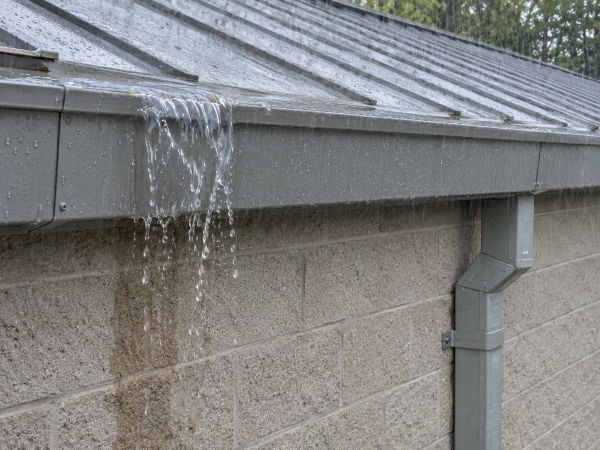
A commercial roof only protects a building if the water it collects has somewhere to go. Gutters and downspouts carry that water away from walls, foundations, entrances and parking areas. For commercial buildings in Portage, MI, a well-planned gutter system helps manage rain, snowmelt and the freeze and thaw cycles Michigan brings each year.
JM Roofing Solutions provides commercial gutter work as part of its commercial roofing services, serving Michigan properties within 75 miles of Hastings. This page explains what building owners should plan for when adding or reworking commercial gutters, and what to ask before approving a scope. To discuss gutters on your building, call (833) 466-5325.
Why Commercial Gutters Matter in Portage
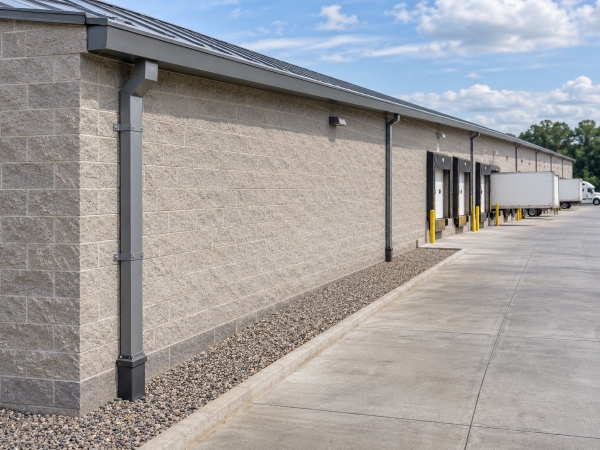
Commercial roofs are often large, and a large roof sheds a lot of water in a single storm. Without a working gutter and downspout system, that water can run down walls, erode landscaping, pool near entrances and soak into foundations. In winter, poorly drained water can freeze at eaves and walkways, which adds safety concerns for customers and staff.
Gutters are also part of the roof’s overall drainage. If water backs up at an edge, it can reach flashing and fascia, so gutter problems and roof problems often show up together.
First identify how the building actually drains. A sloped metal roof may discharge directly to exterior gutters, while a low-slope membrane roof may use internal drains, scuppers or a combination of outlets. Gutters cannot substitute for correcting a blocked internal drain or a poorly placed roof overflow. The system should carry water away from the building without redirecting it toward a pedestrian entrance, loading area or neighboring property.
What to Plan Before Adding or Replacing Gutters
A gutter system is more than a trough along the edge. The table below lists the questions to settle before work begins. It is a planning aid, and the right answers depend on the building.
| Planning question | What to confirm | Why it matters |
|---|---|---|
| Roof area and layout | Which roof sections drain to which edge, and where low-slope areas meet gutters | Gutter capacity has to match the roof area feeding it, not just the length of the edge. |
| Gutter profile and size | Profile, width and material proposed, and why it suits the building | Larger or heavier-flow roofs may need a different profile than a small canopy. |
| Downspouts | Number, size and location, and how they connect to the gutter | Too few or poorly placed downspouts are a common reason gutters overflow. |
| Discharge point | Where the water goes at grade: drains, splash blocks, landscaping or a storm connection | Water released beside a foundation, walkway or drive creates its own problems. |
| Winter conditions | Snow slide, ice at the eave, and how the system handles freeze and thaw | Michigan winters add weight and ice that gutters and their fasteners must withstand. |
| Attachment and fascia | Condition of the fascia or edge the gutter will mount to, and the fastening method | A gutter is only as secure as the surface behind it. |
| Access for service | How crews reach the gutters for cleaning and repair | Hard-to-reach runs tend to be skipped, which leads to blockages. |
Common Gutter Types
Commercial buildings typically use a few general gutter profiles, such as K-style, half-round or box gutters, in materials such as aluminum or steel. Which one fits depends on the roof edge, the water volume and the building’s appearance. Ask the contractor which profile and material are being proposed and why. This page does not assume a particular product.
The roof edge and wall construction should drive the attachment design. A long run may need allowances for thermal movement, joints at transitions and accessible outlets for service. Locations where snow slides from a metal roof need special attention to forces on gutters and supports. Profile names alone do not show whether a system is sized, fastened or sloped for the building.
Signs a Gutter System Needs Attention
Many gutter problems are visible from the ground. The table pairs common signs with what they may point to. It is not a diagnosis, because the cause often needs a closer look at the gutter and the edge behind it. Roof access for that review should be left to trained professionals.
Not every stain or overflow is a failed gutter. Wind-driven rain, roof-edge flashing, an undersized outlet, or drainage beneath a paved area can produce similar symptoms. Photos during rainfall can help identify where water escapes, but the roof edge, connected drainage and supporting fascia may need a closer assessment before work is priced.
| Finding | Possible meaning | Typical next step |
|---|---|---|
| Water spilling over the front edge | Clogged gutter, undersized capacity or a sagging run | Clear and check pitch, then review capacity if it recurs |
| Staining or peeling at the eave | Overflow or a leak at a joint reaching the fascia or wall | Locate the joint or blockage, then repair and check the fascia |
| Pooling at the base of a downspout | Disconnected, blocked or poorly directed downspout | Reconnect or extend the downspout and review grading |
| Gutter pulling away from the edge | Loose fasteners, rotted fascia or ice and snow load | Inspect the backing surface before refastening |
| Ice buildup at the eave in winter | Meltwater refreezing, often tied to roof heat loss and drainage | Review drainage and insulation conditions with a roofer |
Gutters and the Rest of the Roof
Gutters work best when the roof they serve is in good condition. If the roof surface is failing or its drainage is poor, a new gutter may only hide the real problem. A roof inspection can show whether water is reaching the gutter as intended, and the roof inspection page for Portage explains what an inspection report should include. For ongoing care, see roof maintenance in Portage and the general maintenance and repairs information.
For roofs with internal drains, an exterior gutter proposal should explain how it coordinates with existing scuppers, overflow provisions and roof flashing. For sloped roofs, the scope should identify how water is collected at valleys or where adjoining roof areas concentrate runoff. Changing one discharge route without accounting for the rest of the drainage system can move a problem rather than solve it.
What a Gutter Proposal Should Include
To compare proposals fairly, ask that each one lists:
- The gutter profile, size and material, and the downspout count and size.
- How downspouts will discharge and where the water will go.
- The condition of the fascia or edge and any repair it needs first.
- How the system will handle snow and ice.
- Access planning, working hours and any effect on tenants or customers.
- What is excluded, and what finding would change the scope.
Ask for a written scope so the work can be compared with the finished result.
JM Roofing Solutions
can review the gutters on a Portage commercial building. Call (833) 466-5325 to talk through your property.
For occupied Portage buildings, the scope should also identify access arrangements, protection beneath the work, whether downspouts pass near doors or deliveries, and who handles any wall, fascia or underground drainage repairs outside the gutter work. Ask how the finished connections and drainage direction will be checked. A visual or controlled-flow check may be useful, but its inclusion should be stated in the agreement rather than assumed.
FAQ
Do commercial buildings in Portage need gutters?
Many do. Gutters and downspouts control where roof water goes, which helps protect walls, foundations and walkways. Some buildings use internal drains instead, so the roof design matters.
How often should commercial gutters be cleaned?
It depends on nearby trees, debris and roof type. Many owners check them in spring and fall and after major storms.
Can gutters handle Michigan snow and ice?
They can when sized, attached and drained properly, but ice at the eave remains a concern. Ask how the proposed system deals with winter conditions.
Should I fix the roof or the gutters first?
It depends on the findings. If roof damage is causing drainage problems, the roof may need attention first. An inspection can sort out which comes first.