
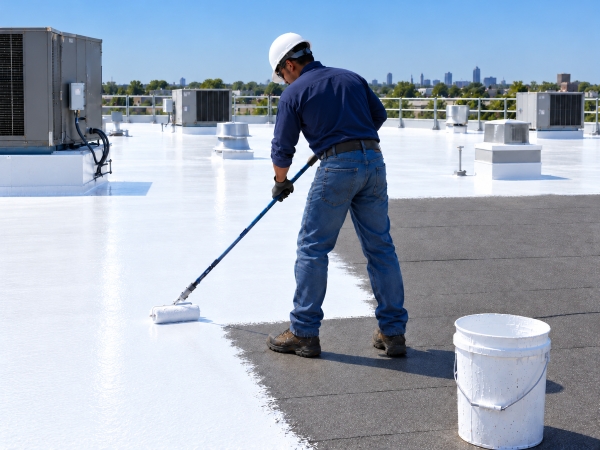
Flat roof sealing in Lansing, MI can mean two different scopes: repairing specific weak points such as seams, flashing, and penetrations, or restoring a broader roof surface with a coating. JM Roofing Solutions provides commercial roof repairs, acrylic coatings and restoration, and ongoing maintenance, so the right scope should follow the actual roof condition rather than the word “sealing” by itself.
The first step is to identify where water is entering, whether the defect is localized, and whether the surrounding roof remains suitable for repair or restoration. A failed flashing detail may call for targeted work. A broadly weathered but otherwise serviceable roof may justify a coating discussion. Wet insulation, unstable substrate, or unresolved drainage can change both decisions.
Where Flat Roof Leaks Often Begin
Flat and low-slope roofs have many transitions where water can enter if a detail deteriorates. Common places to investigate include:
- Seams and laps: areas where membrane sections meet and may separate, lift, or deteriorate.
- Flashing: walls, curbs, parapets, and other transitions where the roof turns or terminates.
- Penetrations: pipes, vents, drains, hatches, and rooftop equipment that interrupt the roof surface.
- Roof edges: perimeter details where membrane, metal, fasteners, or sealants may need attention.
- Low or ponding areas: locations where drainage conditions can add stress to an existing defect.
- Punctures and surface damage: localized damage from service traffic, dropped tools, debris, or previous work.
Weather can expose an existing weakness, but a freeze-thaw cycle does not by itself prove that a seam or flashing defect has enlarged. The repair decision should follow what is actually observed on the roof. JM’s roof leak detection in Lansing page provides related context for tracing where water is entering.
Spot Sealing Is a Localized Repair Scope
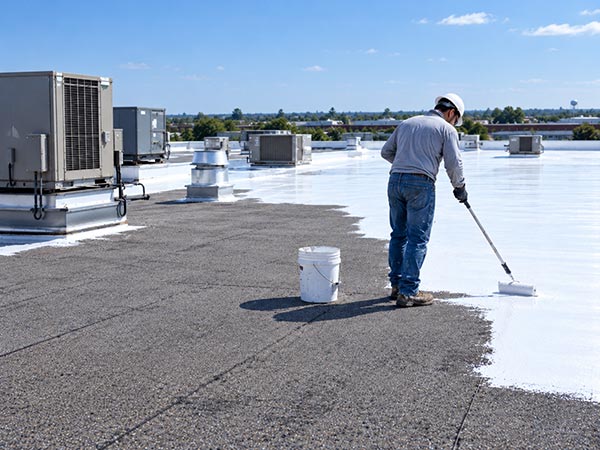
Spot sealing is targeted work at a defined defect. Depending on the existing roof and the problem, that may involve rebuilding a flashing detail, resealing a compatible joint, repairing a penetration, replacing failed material, or using another method suited to the installed system.
The roof type matters because sealants and repair materials are not interchangeable across every membrane and substrate. Surface preparation, compatibility, adhesion, movement, and the condition of surrounding materials all affect whether a localized repair is appropriate.
JM’s maintenance and repairs service includes work around flashing, penetrations, leaks, and other commercial roof defects. A spot repair is most useful when the problem is reasonably localized and the surrounding roof remains serviceable.
Whole-Roof Sealing With an Acrylic Coating
Acrylic coating is a broader restoration scope. Instead of addressing only one seam or flashing point, the coating is applied across a prepared roof surface as part of a compatible restoration system.
That does not mean every weathered roof should be coated. The roof should first be evaluated for moisture, adhesion, substrate condition, previous repairs, drainage, flashing, and other defects. A coating should not be used to conceal wet materials, unstable substrate, or unresolved repair conditions.
JM’s foam and coatings page explains its acrylic coating and spray-foam services, while the roof restoration page for Lansing provides broader context for preparing and restoring an existing roof.
Spot Seal or Coat the Whole Roof?
The table below shows how the scope can differ. It is a planning guide, not a substitute for an on-roof evaluation.
| Question | Spot Sealing May Fit When | A Whole-Roof Coating May Fit When |
|---|---|---|
| Where is the defect? | A few seams, flashing points, penetrations, edges, or punctures have been identified. | The surface is broadly weathered and the roof remains a suitable restoration candidate. |
| What is the overall roof condition? | Surrounding membrane, insulation, and substrate remain serviceable around the repair area. | The existing assembly is dry enough, stable, compatible, and suitable for coating after repairs. |
| What is the goal? | Correct a defined defect and keep the rest of the roof in service. | Restore a broader surface after localized defects and preparation needs are addressed. |
| What can change the plan? | Additional defects, moisture, or deteriorated surrounding materials may expand the repair scope. | Wet insulation, unstable substrate, incompatible materials, or unresolved drainage can make coating unsuitable. |
Some projects include both scopes: localized details are repaired first, and a broader restoration coating is applied only if the roof is a suitable candidate. If moisture or deterioration extends beyond a practical restoration scope, it may be appropriate to compare roof replacement instead.
What Should Be Checked Before Sealant or Coating Is Applied?
Preparation is part of the repair. Before sealant or coating is applied, the contractor should address the conditions that affect adhesion and long-term performance.
- Surface condition: Dirt, loose material, failed old sealant, oxidation, or incompatible repairs can interfere with bonding.
- Moisture: Suspected wet insulation or substrate conditions may require additional investigation before sealing or coating.
- Compatibility: The proposed repair material or coating must suit the existing roof and any prior treatments.
- Drainage: Recurring standing water should be evaluated separately rather than assumed to be solved by surface sealing.
- Weather and cure conditions: The selected material must be applied within its actual temperature, surface-moisture, and cure requirements.
Property managers comparing larger repair proposals can also review JM’s guide to comparing flat roofing proposals in Lansing so competing bids cover the same scope.
Drainage Problems Need Their Own Decision
Standing water can occur because of blocked drains, low areas, settlement, slope, or outlet conditions. A sealant or coating may still be part of the roof repair, but drainage should be evaluated on its own terms.
If recurring water accumulation remains after outlets are clear, the proposal should explain whether drain work, slope correction, tapered insulation, or another adjustment is needed. Treating the surface without understanding the drainage condition can leave the same stress in place after the repair.
Weather Affects Scheduling, but There Is No Universal Season
Commercial sealants and coatings need suitable surface and weather conditions to bond and cure. In Lansing, cold temperatures, rain, dew, and changing seasonal conditions can limit when some products can be applied.
There is no single rule that makes late spring, summer, or early fall correct for every material. The installer should follow the actual temperature, surface-moisture, and cure requirements of the selected repair or coating system. Active leaks may still require temporary protection or another interim step until a permanent repair can be completed under suitable conditions.
Inspection Timing Should Follow the Roof
There is also no universal rule that every commercial flat roof needs a spring-and-fall inspection. The review schedule should reflect roof condition, repair history, drainage, rooftop traffic, debris, exposure, and any written maintenance requirements that apply to the installed system.
A new leak, visible damage, recurring drainage issue, or substantial rooftop work by another trade can justify an additional review outside the normal maintenance schedule.
Flat Roof Sealing in Lansing, MI
JM Roofing Solutions provides commercial roof repairs, maintenance, acrylic coatings, and restoration services in Michigan. For a Lansing property, the strongest sealing decision starts with locating the defect, identifying the existing roof, checking moisture and drainage, and deciding whether the problem is local or broad enough to justify a whole-roof restoration scope.
Building owners can call JM Roofing Solutions at (833) 466-5325 to discuss the roof and whether localized repair, coating, or a larger scope may fit the property.
Frequently Asked Questions
How often does a flat roof need to be resealed?
There is no single schedule. Timing depends on the roof material, current condition, previous repairs, drainage, rooftop traffic, exposure, and any written maintenance requirements.
Can a flat roof be sealed while it is leaking?
A lasting repair usually requires the leak source to be identified and the repair area prepared under suitable conditions. Temporary protection may be used when a permanent repair cannot be completed immediately.
Is sealing the same as recoating a flat roof?
Not necessarily. Sealing can refer to localized work at seams, flashing, penetrations, or other details, while recoating is a broader restoration layer applied across a prepared roof surface.
When is sealing not enough?
Sealing may be insufficient when wet insulation, unstable substrate, widespread deterioration, or unresolved drainage affects the roof beyond a practical localized repair or coating scope.