
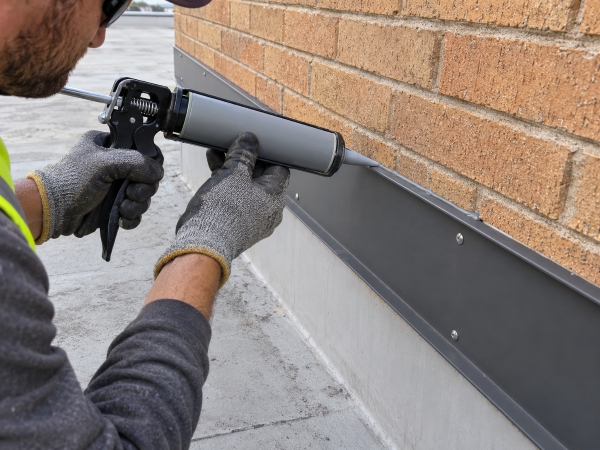
Flat roof sealing is the targeted work of closing small openings at seams, penetrations, flashing and minor defects before water gets in. For commercial buildings in Portage, MI, it can be a practical way to deal with limited problems on a roof that is otherwise sound. It is not a cure for every flat roof leak, so the first question is whether sealing fits the roof’s condition.
JM Roofing Solutions provides commercial roof repairs, maintenance and acrylic coating and restoration services for Michigan properties within 75 miles of Hastings. This page explains what flat roof sealing covers, when it is enough and when it is not. For a Portage commercial roof, a clear diagnosis comes before a sealing recommendation.
What Flat Roof Sealing Covers
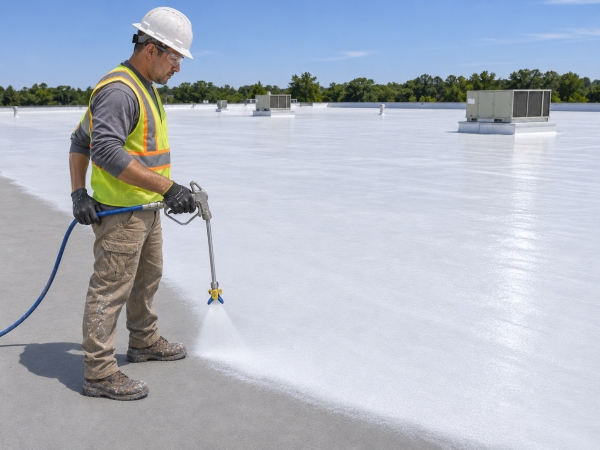
Sealing treats specific details instead of resurfacing the whole roof. Typical targets are seams, flashing joints, the area around pipes and vents, and small cracks or punctures. Flat and low-slope roofs in Portage see snow load, freeze and thaw cycles and summer heat, and those cycles can wear sealant at joints over time. Catching worn areas early keeps water from reaching insulation and the deck.
Which Problems Sealing Can and Cannot Fix
The table lists common roof areas, what sealing can address and when it is not enough. It is a guide for reading an inspection, not a diagnosis, because a stain inside the building does not show where water is entering.
| Roof area | What sealing can address | When sealing alone is not enough |
|---|---|---|
| Seams | A small, localized opening, once a compatible seam repair method is identified | Seams are failing across large areas or the membrane beneath is deteriorated |
| Penetrations | An isolated sealant joint where the flashing assembly remains sound | The penetration is poorly flashed or the roof around it is wet |
| Flashing and edges | Small gaps at parapets, curbs and terminations | Flashing is detached, corroded or the wall or edge behind it is damaged |
| Small punctures and cracks | Small defects may need a compatible membrane patch rather than just surface sealant | Many defects appear close together, which can signal widespread wear |
| Ponding areas | Local sealing after the cause of ponding is addressed | Water keeps standing because of slope, deck or drainage problems that sealant cannot correct |
| Fastener heads (where present) | Minor detail work at exposed fasteners after checking that they remain secure | Fasteners are backing out or the deck below is not secure |
Why the Existing Roof Material Changes the Method
The word sealing can describe different work on different assemblies. A thermoplastic seam may need a compatible welded repair rather than added sealant. EPDM details can require a system-approved primer and tape. A coated roof may need cleaning, sound substrate preparation and a compatible detail treatment before any localized coating is applied. These are examples of roof-system repair principles, not a promise that one product fits every building or that JM uses a particular brand.
Ask the contractor to identify the membrane or existing coating before specifying materials. Previous roof repairs, residue and aged surfaces can affect adhesion. If an existing roof contains a coating of unknown type, a compatibility or adhesion review may be appropriate. Where the roof is wet beneath the surface, the repair scope needs to address that condition rather than sealing it in.
When a Larger Repair or Restoration May Fit Better
If defects are widespread, the membrane is aged or insulation is wet, sealing individual spots may only delay the problem. A broader repair can be more appropriate, and the commercial roof repairs page for Portage explains how to separate a localized repair from damage that needs a wider assessment. When the roof surface is otherwise sound, roof restoration guidance may be worth considering, but acrylic coatings are used only after substrate compatibility, adhesion, moisture and manufacturer requirements are assessed.
Diagnosing a Leak Before Applying Sealant
Water showing up above a ceiling tile may have entered some distance away. It can travel along insulation, the deck or a flashing transition. A useful evaluation starts with the location and timing of the interior leak, examines the related roof details and considers other paths such as rooftop equipment or condensation. A dark stain or blister is a clue, not proof that every layer below is wet.
Where hidden moisture matters to the choice of repair, screening tools may indicate suspicious areas, but conclusions can require further confirmation. Roof access and any intrusive testing belong to qualified personnel. In an operating building, also establish whether suspected leakage is near electrical fixtures or equipment and protect that area until conditions are assessed.
How Sealing Work Should Proceed
Sealing should follow the cause of the defect, with preparation and methods matched to the roof system. The table shows a useful sequence and which records an owner can request as part of the agreed scope.
| Step | What should happen | Evidence to ask for |
|---|---|---|
| Inspect | Find the source of each leak or defect and note moisture limits | Ask whether dated photos and marked locations will be provided |
| Test the surface | Check that the surface is sound, clean and compatible with the sealing material | Ask which compatibility or adhesion checks are necessary and included |
| Prepare | Clean and dry the area and remove loose or failed material | Ask for a list of any preparatory repairs performed |
| Apply | Seal each item with the approved material and method | Ask that product and method be identified in the scope |
| Follow up | Discuss who will inspect the sealed areas later, if a follow-up is agreed | Agree on whether a follow-up visit and written record are included |
Materials must be compatible with the existing roof. A sealant that bonds well to one surface may fail on another. For example, single-ply TPO and PVC require compatible thermoplastic welding and accessory details, while EPDM often uses specified primers, tapes or adhesives. Simply applying general-purpose caulk over a failed membrane seam is not a substitute for a system-specific repair. The contractor should name the product and explain why the selected method suits the existing roof. Roof access should be left to trained professionals.
Weather and Occupied-Building Limits
Sealants, membranes and coatings have product-specific preparation and application conditions. In Portage, a roof that is damp, frozen or too cold for the selected product may need temporary protection until a suitable installation window. The contractor should distinguish a temporary measure from a finished repair and explain any planned return visit. For occupied buildings, the scope should identify work areas, safe access routes and rooftop equipment coordination without assuming that every repair can proceed without disrupting operations.
Flat Roof Sealing and Ongoing Care
Sealant ages, so sealed areas should be rechecked as part of regular roof care. The maintenance and repairs information describes ongoing service for existing roofs. When included in the agreement, dated photos and a written record of each sealed location make it easier to compare conditions at the next visit. Even without a formal report, an owner should retain the written scope and any changes to it.
What a Sealing Proposal Should Include
- The location of each item, the observed condition and the suspected or confirmed cause.
- The material and method for each location.
- Which moisture checks are included, and how inconclusive findings will be resolved.
- Access planning, weather limits and effect on tenants or customers.
- What is excluded, and what finding would trigger a wider repair.
For a Portage commercial building, contact JM Roofing Solutions at (833) 466-5325 to discuss the observed roof defects and whether targeted sealing is an appropriate scope.
FAQ
What does flat roof sealing include?
It addresses limited details at seams, flashings and penetrations when the roof assembly is sound. Punctures or failed seams may instead require a compatible membrane patch or rebuilt flashing.
Can sealing fix a flat roof that leaks in several places?
Sometimes, but multiple leaks can signal widespread wear or wet insulation. An inspection should decide whether sealing is enough or a broader repair is needed.
How long does roof sealant last?
It depends on the material, the surface, the weather and the quality of the work, so no fixed number applies. Recheck sealed areas as part of regular maintenance.
Is sealing the same as roof coating?
No. Sealing treats specific details, while a coating covers a whole roof surface. Coatings are considered only after the roof’s condition and compatibility are assessed.