
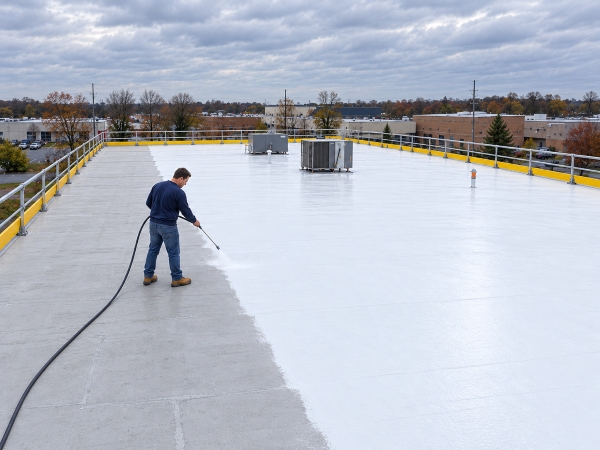
Flat roof waterproofing in Grand Rapids, MI should start with the roof that is already on the building. A weathered but serviceable roof, a roof with many seams and details, and a roof with recurring water accumulation may need different restoration approaches. JM Roofing Solutions provides acrylic roof coating, fabric-reinforced restoration, and spray foam roofing services for commercial properties in Michigan.
The useful first question is not which product sounds most waterproof. It is whether the existing roof is dry, stable, repairable, compatible with the proposed system, and draining well enough for restoration. Known leaks, failed flashing, wet insulation, damaged deck areas, and drainage problems should be evaluated before a new waterproofing layer is specified.
What Flat Roof Waterproofing Means
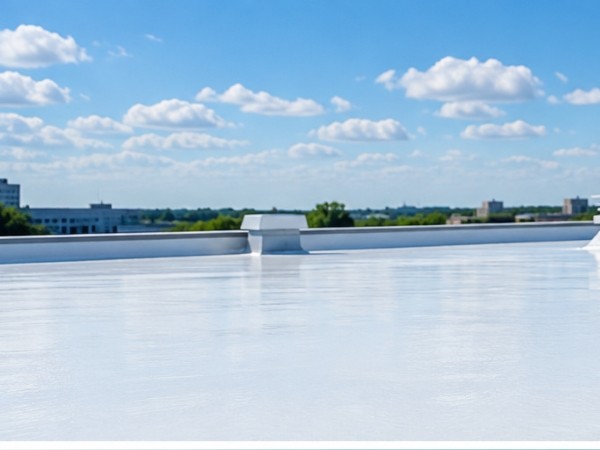
On a commercial flat or low-slope roof, waterproofing is the combination of a continuous roof surface and properly detailed seams, flashing, drains, penetrations, curbs, walls, and edges. A coating or spray-applied system can become part of that waterproofing approach when the existing roof is a suitable base for restoration.
JM Roofing Solutions provides spray foam and acrylic coating systems. The right approach depends on the roof’s existing material, condition, moisture, drainage, repair history, rooftop equipment, and the requirements of the selected restoration system.
Three Waterproofing Approaches to Compare
Each approach below solves a different kind of restoration problem. The table is a planning comparison, not a guarantee that any one system fits a particular roof.
| Approach | How It Creates a Waterproof Surface | When It May Fit | What Must Be Checked First |
|---|---|---|---|
| Acrylic coating | A liquid-applied coating cures into a continuous surface over a prepared roof. | A weathered roof may remain a coating candidate when the underlying assembly is suitable for restoration. | Moisture, adhesion, substrate compatibility, drainage, seams, flashing, and prior repairs. |
| Fabric-reinforced coating | A coating system incorporates reinforcing fabric to strengthen the restored surface and details. | A roof may benefit from added reinforcement around seams, transitions, or other areas when the selected system supports it. | Existing roof condition, preparation, seam and flashing repairs, moisture, and compatibility with the reinforced system. |
| Spray foam with protective coating | Spray polyurethane foam creates a continuous insulated layer that is protected by a compatible coating system. | Complex roof geometry, penetrations, curbs, or selected restoration conditions may make spray foam worth evaluating. | Substrate condition, dryness, adhesion, detailing, drainage, and the suitability of the existing roof for foam application. |
JM’s spray foam roofing in Grand Rapids page provides more detail on that system. The important point is that acrylic, reinforced coating, and spray foam are not interchangeable simply because all can be used in roof restoration.
Repair Active Defects Before Waterproofing
A waterproofing system should not be used to hide an unresolved leak. Open seams, punctures, failed flashing, loose material, damaged roof edges, or unstable substrate should be repaired before the restoration layer is applied.
The same applies to moisture below the surface. If wet insulation or damaged deck materials are present, a surface coating or foam application may not be enough. The contractor should explain what has been confirmed, what remains uncertain, and what materials need repair or removal before restoration can proceed.
Drainage and Ponding Need Separate Evaluation
Recurring standing water is not just a coating question. Blocked drains, low areas, settlement, slope, or outlet conditions may be contributing to the problem.
A restoration system may be part of the final solution, but drainage should be evaluated separately so the same condition is not left in place after waterproofing. Some projects may need drain work, localized slope correction, tapered insulation, or another adjustment depending on the roof.
Know When Replacement Belongs in the Comparison
Waterproofing can be a useful restoration path when enough of the existing roof remains suitable to stay in service. When moisture, deterioration, substrate damage, or repeated failures affect broad roof areas, it may be appropriate to compare restoration with full roof replacement.
Replacement is not automatic because one leak exists, and restoration is not automatically the lower-scope answer. The decision should follow the actual roof condition and what must be corrected below the surface before either approach can succeed.
How a Waterproofing Project Is Typically Planned
The exact sequence depends on the selected system, but a commercial waterproofing project commonly includes several steps:
- Identify the existing roof system and review visible conditions.
- Investigate leak areas, moisture concerns, drainage, seams, flashing, and penetrations.
- Repair defects and remove or correct materials that cannot remain in the restored assembly.
- Clean and prepare the roof for the selected acrylic, reinforced, or spray-foam system.
- Apply the restoration system according to its actual coverage, detail, weather, and cure requirements.
- Review the completed surface and critical details such as drains, edges, walls, curbs, and penetrations.
Because the existing roof remains part of many restoration projects, the proposal should state exactly what will stay, what will be repaired, and what will be removed. Do not assume that choosing a coating or foam system always eliminates tear-off or avoids operational disruption.
Grand Rapids Weather Still Makes Detailing Important
Grand Rapids commercial roofs can experience snow, freezing temperatures, thaw cycles, and heavy rain. Those conditions can expose weaknesses in seams, flashing, drainage, and other transition details, but weather alone does not prove a specific defect has grown or failed.
Owners who already see interior staining or active leaks should first determine where water is entering. JM’s roof leak detection in Grand Rapids page provides related context for tracing a leak before deciding on the repair or restoration scope.
Questions to Ask Before Choosing a Waterproofing System
- What roof system is installed now?
- What defects must be repaired before waterproofing begins?
- How were moisture concerns evaluated?
- Does the roof have recurring drainage or ponding problems?
- Why is acrylic, reinforced coating, or spray foam being proposed for this roof?
- What preparation and compatibility checks are required?
- What parts of the existing roof will remain in place?
- What conditions could change the scope after work begins?
- What maintenance or future recoating requirements apply to the selected system?
Flat Roof Waterproofing in Grand Rapids, MI
JM Roofing Solutions provides acrylic coating, fabric-reinforced restoration, and spray foam roofing services for commercial buildings in Michigan. For a Grand Rapids property, the strongest waterproofing decision starts with the existing roof, moisture, drainage, repairs, and compatibility rather than with one product name.
Building owners can call JM Roofing Solutions at (833) 466-5325 to discuss the roof and which restoration approach may fit the property.
Frequently Asked Questions
What is the difference between flat roof waterproofing and roof coating?
A roof coating can be one part of a waterproofing strategy. The full waterproofing scope also depends on seams, flashing, drains, penetrations, edges, and the condition of the roof below the coating.
Can a flat roof be waterproofed without full replacement?
Sometimes. Restoration may be possible when the existing roof is a suitable base and moisture, substrate, drainage, and repair conditions can be addressed within the proposed system.
Is spray foam better than acrylic coating for waterproofing?
Not automatically. The better fit depends on roof geometry, substrate, moisture, drainage, repair needs, and the requirements of the selected restoration system.
What should be repaired before waterproofing a flat roof?
Known seams, flashing defects, punctures, wet materials, unstable substrate, and drainage problems should be evaluated and corrected as required before the restoration system is applied.