
A commercial roof in Jackson, MI works through four very different climates in a single year, from February snow load to July UV. Each season stresses the roof in its own way, so a routine built on generic advice tends to miss what matters here. Scheduling roof maintenance around Jackson’s seasons is the difference between catching a problem and paying for one.
At JM Roofing Solutions, we maintain commercial roofs across the area, so call us at (269) 361-8305 to set up a schedule.
Seasonal Roof Maintenance Plans for Michigan Climate
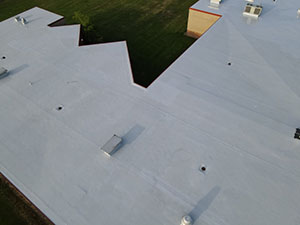
A seasonal plan works because the threats to a flat roof change completely from one quarter to the next. Winter brings weight and freeze-thaw movement, spring brings wind and heavy rain, and summer brings relentless sun. A single annual visit will always land in the wrong season for at least three of those threats. Spacing maintenance across the year means each inspection arrives when it can catch the damage that season causes, before small issues grow into leaks.
Winter Snow Load and Freeze-Thaw Damage
Winter is the hardest season on a Jackson flat roof, and the damage comes from two directions. Snow load adds steady weight that stresses the deck and any weak seams, while freeze-thaw cycling works moisture into small cracks, freezes it overnight, and pries those cracks wider.
The trickier winter problem hides at the roof drains. On a sunny afternoon, snow melts and runs toward the drains, then refreezes overnight at those colder points and slowly blocks them with ice. With the drains sealed shut, the next melt has nowhere to go, so it ponds and freezes in turn. Clearing snow buildup near drains and checking that they run freely is the kind of small winter task that prevents a much larger spring headache.
Spring Storms and the Roof Maintenance Reset
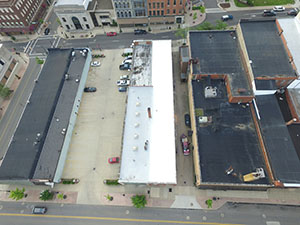
Spring is when winter’s hidden damage finally shows itself, which makes it the most useful inspection of the year. As the snow clears, the cracked seams, lifted flashing, and stressed drains from the cold months become visible and reachable. A spring visit is essentially a reset, a chance to repair what winter opened up before the wet season exposes it.
Spring also brings Michigan’s heavy storm season. Wind drives rain sideways under loose flashing, and a roof that limped through winter with a minor gap will leak the first time a real storm tests it. Catching and sealing those weak points in spring is far cheaper than chasing an active leak in the middle of a downpour.
How Summer Sun Ages a Flat Roof
Summer damage is slower and easier to ignore, which is what makes it dangerous. Ultraviolet light breaks down the surface of most roofing membranes, drying them out and making them brittle over years of exposure. On a dark roof, peak surface temperatures climb well above the air temperature, and that daily heating and cooling expands and contracts the membrane until seams and flashing start to fatigue.
A midsummer inspection catches this wear while it is still cosmetic. The crew looks for surface cracking, dried-out sealant, and any spot where the membrane has started to lift, then addresses it before fall and winter compound the problem. Summer is also the right window for a protective coating if the roof is a candidate, since warm, dry conditions give it the best cure.
Year-Round Roof Maintenance Pays Off
No single visit can protect a flat roof from a full year of this climate. A schedule that meets winter, spring, and summer on their own terms is what keeps a commercial roof watertight and pushes its replacement date years down the road.
For roof maintenance in Jackson, MI contact JM Roofing Solutions at (269) 361-8305 today.
FAQ
How often should a commercial roof be inspected in Michigan?
Twice a year, in spring and fall, plus a check after any major storm. Michigan winters are hard on flat roof seams and drains, so steady inspections catch freeze-thaw damage before it spreads.
What does a commercial roof maintenance visit typically include?
A typical visit covers the membrane, flashing, seams, and drains, plus debris clearing and minor repairs on the spot. The goal is to leave the roof watertight and flag anything to watch.
Can regular maintenance really extend the life of a commercial roof?
Yes, and the difference is large. Routine care fixes small problems cheaply, while deferred maintenance lets water reach the insulation and deck, which often forces a full replacement costing many times more.