
For a commercial building owner in Jackson, MI, a flat roof repair should start with one question: is the problem truly localized, or does the visible symptom point to a broader roof condition? JM Roofing Solutions provides commercial roof repair in Michigan, and the scope should be based on what the inspection confirms rather than on the ceiling stain, drip, or open seam that first drew attention.
A localized defect may support repair when the surrounding roofing remains serviceable and the affected area can be defined. Repeated failures, wider moisture, deteriorated materials, or unresolved drainage can require a broader roof assessment before another patch is approved. Call (833) 466-5325 to discuss a Jackson commercial roof.
Budgeting a Flat Roof Repair
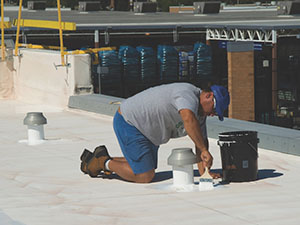
A repair budget makes sense only after the problem is defined. A small puncture, one failed seam, or a limited flashing defect can be a reasonable repair when the surrounding roof remains serviceable. The budget changes when moisture extends beyond the visible defect, several details are failing, or the roof condition makes another localized repair unreliable.
That is why a useful estimate should connect the proposed work to inspection findings. It should explain what is being repaired, what is excluded, and what condition would trigger additional investigation or a broader scope.
The Rising Cost of Ignoring Small Leaks
A small leak can spread beyond the original entry point because water may travel through or along components of the roof assembly before it appears inside. A ceiling stain identifies where water became visible indoors, not necessarily where it entered the roof.
Wet insulation can also perform differently from dry insulation, but a stain alone does not establish how much insulation is affected. If suspected moisture could change the repair scope, the contractor should determine what additional investigation is appropriate for that roof rather than assume the damage is limited to the visible area.
From Symptom to Inspection Evidence
The table below connects common owner observations with the evidence needed before repair scope and budget are set.
| What the Owner Sees | What the Inspection Checks | What It Can Mean for Scope |
|---|---|---|
| Interior stain or drip | Roof entry points, nearby details, visible roof damage, and whether moisture may extend beyond the symptom area | A defined source with serviceable surrounding materials may support repair. Uncertain or wider moisture calls for more assessment before pricing. |
| Standing water after surrounding areas have drained | Drain condition, low areas, nearby membrane condition, and whether the issue is maintenance, drainage, or substrate related | A clogged drain may be a maintenance issue. Persistent ponding tied to slope or substrate is broader than a membrane patch. |
| Open or lifted seam | The failed seam, nearby seams, surrounding material condition, and whether the defect is isolated or repeated | One compatible seam repair may be reasonable. Repeated seam failure can indicate a broader condition. |
| Gap or damage at a curb or penetration | Flashing, sealant, adjacent roofing, movement, and similar details elsewhere on the roof | One failed detail may support targeted repair. Similar failures at multiple details can expand the scope. |
| Suspected moisture beyond the visible defect | Available moisture evidence and whether another investigation method is needed to define the affected area | The repair should not close over unresolved wet materials. If moisture extent is uncertain, confirm it before finalizing the scope. |
JM Roofing Solutions’ commercial roof repairs in Jackson page covers the broader repair-versus-replacement decision. This article stays focused on what makes one flat-roof defect repairable and what evidence should change the budget.
Comparing Flat Roof Repair to Full Replacement

Repair and replacement solve different conditions. A localized repair addresses a defined failure while leaving serviceable roofing in place. Replacement addresses a broader roof condition when the existing assembly can no longer support the intended repair or when repeated failures make continued localized work impractical.
Replacement scope also varies by project. Removal, deck or insulation work, the new roof assembly, flashing, drainage, access, and concealed conditions should be defined in the replacement proposal rather than assumed from a generic tear-off description. JM Roofing Solutions has a commercial roof replacement page for additional replacement context.
When a Flat Roof Repair Buys Real Time
A repair can extend useful service when the defect is localized, the surrounding roof remains serviceable, the repair method is compatible with the existing material, and concealed conditions do not undermine the work. Roof age can provide context, but age alone does not decide whether a repair is worthwhile.
A broader assessment is more appropriate when several leak sources are active, similar failures repeat across the roof, moisture may extend beyond the visible area, drainage contributes to recurring problems, or surrounding roofing is too deteriorated for a dependable localized repair.
What a Flat Roof Repair Quote Should Include
A clear quote makes it easier to compare scope and understand what happens if the roof condition changes after work begins. Ask the proposal to identify:
- The roof location and defect included in the repair
- The proposed repair method and materials compatible with the existing roof
- Which nearby seams, flashing, penetrations, or drains are included in the assessment
- Any moisture findings or unresolved concealed conditions that could change the work
- Important exclusions, including work that is not part of the current repair
- How added work will be documented, approved, and priced if the scope expands
- Access, staging, and scheduling expectations for the occupied building
Do not assume a particular photo package, moisture scan, or closeout report is included unless it appears in the written quote. The documentation should match what the contractor actually provides for that project.
Planning Access Without Sending the Owner onto the Roof
Roof access and work-area planning belong to the contractor. Before work starts, coordinate where crews will enter, how materials will reach the roof, whether entrances or occupied areas below need protection, and what scheduling limits affect the building. Owners can report interior symptoms and operating constraints without climbing onto the roof to diagnose the problem themselves.
Making Flat Roof Repair Pay Off
The financially sound approach is to repair a defined problem when the surrounding roof supports that scope and to stop treating a localized patch as the answer when the evidence points to a wider condition. For flat roof repair in Jackson, MI, contact JM Roofing Solutions at (833) 466-5325. Their roof maintenance in Jackson page provides additional context for monitoring roof conditions between repair events.
Frequently Asked Questions
How do I know if my flat roof needs repair or a broader assessment?
A localized repair may fit when one defect is defined and the surrounding roof remains serviceable. Repeated failures, wider moisture, deteriorated materials, or unresolved drainage can justify a broader assessment.
What are common flat roof repairs on commercial buildings?
They can include compatible seam repairs, flashing repairs at curbs and penetrations, drain-related work, and patches for localized membrane damage. The method depends on the existing roof material and condition.
How long does a flat roof repair last?
There is no universal lifespan. Repair durability depends on the roof condition, defect, compatible repair method, installation quality, exposure, and whether surrounding materials remain serviceable.
What should a flat roof repair quote include?
It should define the repair area, method, compatible materials, assessment scope, exclusions, concealed-condition process, access planning, and how added work will be approved if the scope changes.