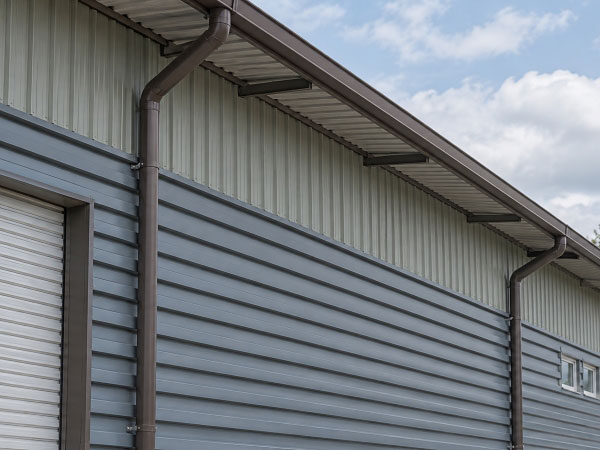
Commercial gutter problems are easier to solve when the repair-versus-replacement decision is based on the condition and capacity of the entire drainage system. For a Hastings, MI property owner, that means looking at the gutter runs, joints, hangers, downspouts, roof-edge details, discharge points, and whether the system is large enough for the roof area it serves.
JM Roofing Solutions provides commercial gutter services within its Michigan service area. Property owners can call (833) 466-5325 to discuss whether an existing system is a repair candidate or whether replacement deserves consideration.
Start With the Cause of the Gutter Problem
Overflow, sagging, leaks, staining, or water collecting near the building can have different causes. A clogged outlet may need cleaning, a loose hanger may need repair, a failed joint may need resealing, and a system that is fundamentally undersized may need a broader redesign rather than repeated patching.
The first step is to identify whether the problem is localized or repeated across the system. JM Roofing Solutions’ Maintenance & Repairs page provides related context for evaluating drainage issues alongside other commercial roof maintenance and repair needs.
Commercial Gutter Sizing Should Match the Roof
Commercial gutter and downspout sizing should reflect the roof area draining into the system, rainfall design criteria, gutter profile, outlet count, downspout capacity, and the intended discharge path. A larger building does not automatically need one particular gutter size, and a system should not be judged by appearance alone.
If a gutter repeatedly overflows during normal storm conditions even after outlets are clear and components are in good condition, capacity should be evaluated before more repairs are authorized.
Repair or Replace? Compare the Whole System
CapacityThe system handles expected drainage once blockages and defects are corrected.
| Condition to Check | Repair May Be Reasonable | Replacement Deserves Consideration |
|---|---|---|
| Extent of damage | Damage is isolated to one joint, hanger, outlet, or short section. | Similar failures are occurring across multiple runs or sections. |
| Material condition | Most of the gutter remains structurally sound with localized wear. | Rust-through, cracking, deformation, or deterioration affects large portions of the system. |
| Supports and attachment | A limited number of hangers or fasteners are loose or damaged. | Attachment failure is widespread or the gutter repeatedly sags after prior repairs. |
| Capacity | The system handles expected drainage once blockages and defects are corrected. | The gutter or downspout capacity is inadequate for the roof area and discharge conditions. |
Downspouts and Discharge Matter as Much as the Gutter
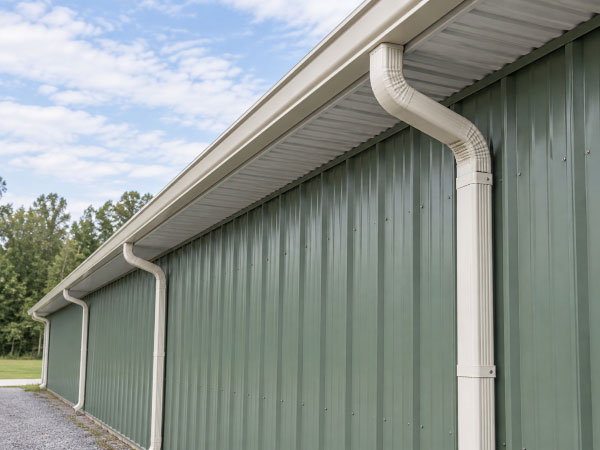
A gutter can be in good condition and still perform poorly if downspouts are clogged, undersized, poorly located, or discharging into an area where water cannot move away from the building. The assessment should follow the water from the roof edge to the final discharge point.
Water that backs up at an outlet or collects near entrances, pavement, landscaping, or the foundation may point to a drainage problem beyond the gutter run itself. The written scope should identify whether downspout routing or site drainage work is included.
Inspect the Roof Edge Before Replacing Gutters
Commercial gutters work with fascia, edge metal, flashing, scuppers, and other roof-edge details. If the attachment surface or flashing is damaged, simply replacing the gutter may leave the underlying problem unresolved.
JM Roofing Solutions’ Roof Inspection Lansing page specifically includes gutters, scuppers, and internal drains as part of commercial drainage evaluation, which is the same kind of coordination needed before major gutter work.
Material Choice Should Follow the Building
Aluminum and galvanized steel are both common commercial gutter materials, but neither is automatically best for every Michigan property. Weight, corrosion exposure, finish, fastening method, appearance, maintenance, budget, and compatibility with the building should all be considered.
The proposal should identify the gutter material, profile, gauge or thickness where relevant, joints, supports, downspouts, and finish so competing scopes can be compared on the same basis.
Winter Conditions Can Expose Weak Points
Debris, trapped water, snow, and ice can add stress to gutters and supports during winter. Clearing debris before freezing weather and checking the system after severe weather can help reveal loose hangers, shifted sections, damaged outlets, or drainage problems that need attention.
There is no universal twice-a-year inspection rule for every building. Inspection frequency should reflect nearby vegetation, prior clogs, roof configuration, storm exposure, drainage history, and how critical uninterrupted drainage is for the property.
Ask for a Specific Repair or Replacement Scope
A useful proposal should identify which gutter sections are being repaired or replaced, the reason for the recommended scope, the downspout plan, attachment details, roof-edge work, discharge locations, removal of existing components, and any exclusions.
If replacement is recommended because the system is undersized, the contractor should explain what changed in the design or capacity rather than simply replacing the old system with a similar layout.
Commercial Gutters in Hastings, MI
For a Hastings commercial property, the decision should come down to evidence: how widespread the damage is, whether the material and supports remain serviceable, whether the roof-edge details are sound, and whether the system has enough capacity for the roof area and discharge path.
Call JM Roofing Solutions at (833) 466-5325 to discuss whether commercial gutter repair or replacement should be evaluated for the building.
Frequently Asked Questions
How do I know if commercial gutters need repair or replacement?
Localized damage may be repairable, while widespread deterioration, repeated support failure, or inadequate system capacity can make replacement the more practical comparison.
Can a commercial gutter system be too small for the roof?
Yes. Capacity should match the contributing roof area, rainfall criteria, outlet arrangement, downspouts, and discharge path rather than relying on a standard size for every building.
Which gutter material is best for a commercial building?
There is no universal best material. Aluminum and galvanized steel each have different cost, weight, corrosion, finish, and maintenance considerations.
How often should commercial gutters be inspected?
The schedule should reflect debris exposure, prior clogs, storm history, roof configuration, drainage performance, and the building’s maintenance needs rather than a fixed interval.