
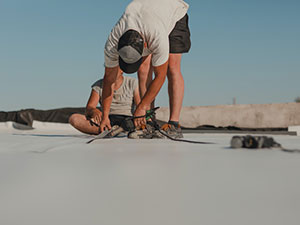
A flat roof can develop leaks from damaged membrane, failed seams, worn flashing, blocked drainage, or problems hidden from inside the building. Understanding how a repair is assessed and completed helps property managers evaluate recommendations and plan the work. Flat roof repair can range from a localized patch to work around seams, flashings, penetrations, or drainage areas.
Call JM Roofing Solutions at (833) 466-5325 for flat roof repair in Walker, MI.
Flat Roof Repair Starts With Finding the Actual Failure
A repair visit usually begins with a visual inspection of the roof surface. The technician looks for punctures, membrane deterioration, separated seams, damaged flashing, and other conditions that could allow water inside. Flashing seals vulnerable transitions such as roof edges, walls, curbs, and equipment penetrations.
Drainage areas and low points also receive attention because standing water can stress the roof system. A roof may have more than one problem, so the goal is to understand the conditions around the suspected leak rather than focus on one visible defect.
An interior stain does not necessarily show where water entered the roof. Water can travel beneath roofing materials before reaching a ceiling or wall. When the source is difficult to confirm, infrared or moisture scanning may help identify wet insulation or concealed moisture.
Repair Methods Depend on the Type of Damage
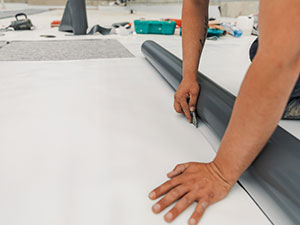
Localized membrane damage can often be addressed by preparing the affected area and installing compatible patching material. Preparation may involve cleaning and drying the surface, removing deteriorated material, and securing the repair so it bonds with the surrounding roof system.
Seam failures may require cleaning and resealing or repairing the affected section. Damaged flashing can call for resetting or replacing the flashing and sealing the transition against moisture. The method depends on the roofing system, extent of deterioration, and condition of surrounding materials.
A repair should also address conditions that contributed to the failure. For example, a recurring leak near a drain may require attention to drainage performance as well as the damaged roof surface.
What to Expect During a Repair Visit
Before work begins, the building owner or property manager should receive a clear explanation of what was found and which areas require attention. The repair scope may include surface preparation, removal of damaged material, installation of compatible materials, and sealing of the completed area.
Access and weather can influence the schedule. Wet or cold conditions may make roof surfaces unsuitable for certain materials, while drying and curing can add time. Most localized repairs on accessible areas can take a few hours, while multiple repair points or flashing replacement may require a full day.
A quality repair visit should also leave a record of the work performed. Documentation can identify the original problem, repaired location, materials or methods used, and follow-up recommendations.
Flat Roof Repair and Follow-Up
After a repair is completed, the surrounding area should be checked for remaining moisture or additional defects. Ongoing observation can reveal whether another condition elsewhere is contributing to leaks.
Regular inspections are useful after severe weather or recurring water intrusion. Keeping repair records helps property managers track the system’s condition and make informed decisions about future repairs, restoration, or replacement.
Flat Roof Repair for Better Property Planning
Understanding the repair process helps property managers make informed decisions when a leak or roof defect appears. Prompt diagnosis, appropriate repair methods, and clear documentation can help control damage and guide future maintenance planning.
For flat roof repair in Walker, MI contact JM Roofing Solutions at (833) 466-5325 today.
FAQ
How does a contractor find where a flat roof is leaking?
The process generally includes inspecting the membrane, seams, flashings, drains, and low areas for visible damage. If the source is unclear, infrared or moisture scanning may help identify concealed saturation. Water can travel below the roof surface, so the interior leak location may differ from the actual failure.
What happens during a flat roof repair visit?
The damaged area is cleaned and prepared before deteriorated material is removed or repaired. Compatible patching material may be installed, flashing may be reset or replaced, and the repaired area is sealed. The visit should also document what was found and what work was completed.
How long does a flat roof repair take?
Many localized repairs on accessible areas take a few hours. Larger repairs involving several failure points or flashing replacement may take most of a day. Wet or cold weather can affect surface preparation, drying, and curing times.