
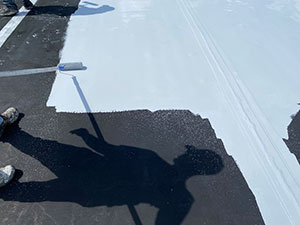
Commercial roof owners in Walker may consider a coating when an existing roof remains serviceable but needs added protection against weather and surface wear. Silicone, acrylic, and polyurethane coatings can all extend the useful life of some roof systems, but they differ in water resistance, flexibility, durability, and cost. Roof coating selection should reflect the existing roof’s condition, drainage, exposure, and the building owner’s priorities.
Call JM Roofing Solutions at (833) 466-5325 for roof coating in Walker, MI.
Roof Coating: Silicone vs. Acrylic
Silicone coating is valued for its resistance to ultraviolet exposure and its ability to tolerate ponding water, which makes it a strong option for roofs where drainage is difficult to correct. It also stays flexible rather than becoming hard and brittle with age. Its main drawback is that the surface can attract dirt, and adhesion depends on proper preparation of the existing roof.
Acrylic coating is water-based and often offers a cost-effective way to add a reflective surface to an existing commercial roof. It can perform well under regular sunlight and weather exposure, but prolonged standing water can cause deterioration. Acrylic may therefore be a better fit for roofs with adequate drainage and limited ponding.
Comparing Polyurethane With Other Coatings
Polyurethane coatings are known for strong resistance to abrasion and foot traffic, making them useful where a commercial roof receives more mechanical exposure. They can also provide good protection against impacts and weathering. The tradeoff is that polyurethane systems can be more expensive and are often installed as part of a multi-layer coating system.
Compared with silicone, polyurethane may offer better resistance to physical wear, while silicone has a stronger advantage where ponding water is a recurring concern. Acrylic generally offers easier application and strong reflectivity at a lower cost, but it requires more attention to prolonged moisture exposure.
Choosing the Right Roof Coating
The roof’s drainage profile is a key factor. Areas that routinely hold water after rainfall place different demands on a coating than roofs where water drains efficiently. The existing membrane or roof surface also matters because coatings need a sound, properly prepared substrate to adhere effectively.
Coating thickness, surface preparation, UV exposure, foot traffic, and local weather all affect service life. No coating type automatically provides the longest result on every roof. A product applied over a clean, stable surface at the specified thickness can perform very differently from a thinner or poorly bonded application.
Roof Coating Compatibility and Recoating
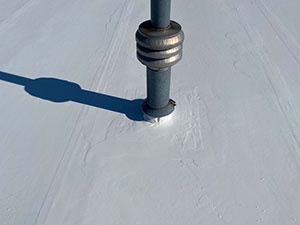
A new coating cannot simply be applied over any existing coating. Different coating chemistries may not bond properly, and an incompatible application can lead to adhesion loss or delamination. Before recoating, the existing material should be identified and the substrate checked for areas of failure or deterioration.
Recoating can extend the service life of a coating system when the existing surface remains suitable for another application. Warranty periods vary by coating type, application thickness, and system design, so owners should review the proposed system rather than rely on a generic lifespan estimate.
Planning a Roof Coating Decision
Silicone, acrylic, and polyurethane each solve different roofing needs. Silicone is well suited to ponding water, acrylic can provide a reflective and economical option on well-drained roofs, and polyurethane can be useful where physical durability is a higher priority.
The best comparison starts with the condition of the roof beneath the coating and the demands placed on it. Understanding these differences helps building owners ask better questions and evaluate recommendations before approving a coating project.
For roof coating in Walker, MI, contact JM Roofing Solutions at (833) 466-5325 today.
FAQ
What is the difference between silicone and acrylic roof coating?
Silicone generally handles ponding water better and stays flexible over time, while acrylic is water-based, reflective, and often more cost-effective. Acrylic is less suitable for areas with prolonged standing water, so drainage is a major part of the decision.
Which roof coating type lasts the longest?
There is no universal longest-lasting option. Service life depends on coating chemistry, application thickness, UV exposure, traffic, substrate preparation, and maintenance. Warranty periods also vary by system, and properly applied recoating can extend the useful life of a coating system.
Can any type of roof coating be applied over an existing coating?
No. Compatibility depends on the chemistry of the existing and new coatings. Applying an incompatible material can cause adhesion failure or delamination, so the existing coating should be identified and the surface evaluated before recoating.