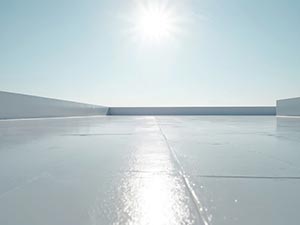
Commercial buildings in Wyoming, MI face significant heat gain through the roof during Michigan’s warm months, which places significant demand on cooling systems and adds to monthly energy costs. A roof coating offers a practical way to reduce that heat gain while also protecting the underlying membrane from the thermal stress that comes with seasonal temperature swings.
When evaluating an existing roof, our Wyoming roof restoration article offers a broader look at restoration planning. If spray foam is being considered, read about spray foam roofing and recoating before discussing the proposed system.
Call JM Roofing Solutions at (833) 466-5325 for roof coating in Wyoming, MI.
How Reflective Roof Coating Reduces Heat Absorption
A dark roof surface absorbs solar energy and transfers much of that heat into the building below, which is common on many older commercial roofs that were never designed with reflectivity in mind. A white or light-colored roof coating changes this dynamic by reflecting a significant portion of solar energy away from the building rather than allowing that heat to transfer through the roofing system and into the building.
This reflective effect reduces the surface temperature of the roof itself, often by a considerable margin compared to an uncoated dark membrane on a sunny day. Lower surface temperatures mean less heat is available to transfer downward into the building’s interior, which directly affects how hard the cooling system has to work to maintain a comfortable temperature inside.
What Lower Heat Gain Means for HVAC and Energy Costs
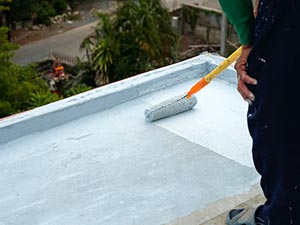
When less heat enters a building through the roof, the HVAC system does not need to work as hard or operate as often to offset that heat load. This reduced demand can ease strain on cooling equipment during the hottest parts of the day, when energy costs are often highest and equipment is working at or near capacity.
Results vary based on building size, existing insulation levels, and how the building is used, so building owners should approach potential energy savings from a roof coating with realistic expectations rather than specific promised figures. That said, a reflective surface consistently reduces peak cooling demand in buildings that previously had a dark, heat-absorbing roof, which provides a measurable financial benefit alongside the coating’s protective function.
Protecting the Membrane from Thermal Stress Year-Round
Roof coatings do more than address summer heat gain. Temperature swings between day and night, and between seasons, cause roofing membranes to expand and contract repeatedly over their service life. This thermal cycling places stress on seams and the membrane surface, and a coated roof experiences less extreme temperature swings than an uncoated one, which reduces that stress.
Coatings also provide a layer of UV protection that helps slow the gradual breakdown many membranes experience from prolonged sun exposure. This protective effect continues through Michigan’s colder months as well, since UV exposure continues even when temperatures drop, even though the reflective benefit is most pronounced during summer.
Roof Coating Makes Financial Sense
A roof coating combines a protective maintenance function with a genuine energy efficiency benefit, giving building owners a solution that delivers value in more than one way. Reduced cooling demand and extended membrane life work together to make coating a financially sound choice for many commercial buildings.
For roof coating in Wyoming, MI, contact JM Roofing Solutions at (833) 466-5325 today.
FAQ
How much can a roof coating reduce cooling costs on a commercial building?
Results vary depending on building size, insulation levels, and local climate conditions, so specific percentage savings are difficult to promise with confidence. Reflective coatings consistently reduce peak cooling demand compared to an uncoated dark roof, particularly during the hottest parts of the day when cooling systems work hardest.
Does a roof coating help in winter as well as summer?
Reflectivity delivers its biggest benefit during warm months, but coatings continue protecting the membrane from ultraviolet degradation throughout the year, including winter. Coatings also help moderate the temperature swings that cause thermal movement and membrane stress during Michigan’s cold season, which supports the roof’s overall longevity in addition to providing summer cooling benefits.
Which roof coating type is most energy efficient?
Both silicone and acrylic coatings are available in white or light colors with high solar reflectance values, so neither has a clear advantage based on reflectivity alone. The better choice for a given roof depends more on the roof’s drainage profile and the existing membrane’s condition than on which coating type reflects marginally more sunlight.