
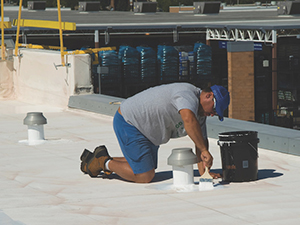
A ceiling stain shows where water became visible, not necessarily where it entered the roof. On a commercial building, water can move through insulation, along deck surfaces, and around penetrations before appearing inside. That is why roof leak detection should connect exterior findings, interior evidence, moisture limitations, and a written repair decision rather than rely on the stain location alone. JM Roofing Solutions serves Kalamazoo and other approved Michigan markets. Call (833) 466-5325 to discuss a commercial roof leak assessment.
Roof Leak Detection Tips That Work
A useful leak investigation starts by documenting what is known and what is still uncertain. Roof surfaces, drainage areas, penetrations, flashing, previous repairs, and accessible interior conditions can all provide clues. Interior staining may narrow the search area, but it does not prove the exact entry point.
Building owners should not be encouraged to probe seams, walk wet roofs, or perform destructive testing. Those steps can create safety risks or damage the roof. A professional inspection can document accessible conditions and decide whether visual findings are enough or whether additional moisture testing is justified.
Where Roof Leak Detection Should Focus First
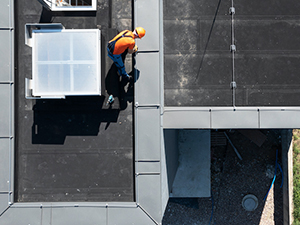
Flashing, penetrations, seams, drains, previous repair areas, and roof transitions are common places to evaluate because each can be affected by movement, aging, workmanship, or later rooftop activity. No single detail should be assumed to cause most leaks.
The inspection should note visible openings, loose or deteriorated materials, ponding, blocked drainage, surface damage, and other conditions that may relate to the reported leak. If several possible sources exist, the report should distinguish confirmed defects from suspected areas that still need testing.
Roof Leak Detection Tools That Find What Eyes Miss
Visual inspection does not always show concealed moisture or a small membrane breach. Depending on the roof assembly and suspected condition, a contractor may recommend additional diagnostic methods. Thermal imaging can identify temperature patterns that may be consistent with moisture, but a thermal anomaly is not proof of wet insulation by itself.
Sun exposure, membrane color, equipment exhaust, shadows, roof construction, and weather can influence thermal patterns. If a thermal finding could change the scope, the report should explain how it was confirmed or clearly label it as unconfirmed. The confirmation method depends on the roof assembly.
Electronic leak detection may also be useful on compatible roof assemblies, but it is not appropriate for every membrane or deck configuration. The inspection report should identify what method was used, what its limitations were, and how the result affected the recommendation.
What to Do After Leak Detection Finds the Source
Once the likely entry point and surrounding roof condition are understood, the next step should match the documented cause. A localized flashing defect may call for a focused repair. A damaged seam or puncture may require a compatible repair method for the existing roof system. Drainage problems may require separate corrective work rather than simply covering the visible symptom.
The repair scope should state what will be repaired, what materials or methods are proposed, what remains uncertain, and what conditions could expand the work. Avoid fixed patch dimensions or one repair recipe for every roof because compatibility and detailing depend on the existing assembly.
What Your Inspection Report Should Include
The written report turns an inspection into a usable maintenance, repair, or replacement decision. It should show what was observed, what was confirmed, and what still requires follow-up.
- Dated, located photos: Images should identify the defect or moisture concern and show where it sits on a roof plan, aerial image, or clearly described roof area.
- Finding status: Separate confirmed defects from suspected conditions and explain whether a thermal or other diagnostic finding still needs confirmation.
- Moisture limitations: State what the inspection can and cannot establish about concealed wet insulation, deck condition, or other hidden components.
- Prioritized actions: Distinguish urgent repairs, scheduled corrective work, maintenance items, and areas that only need monitoring.
- Reinspection triggers: Define when an area should be checked again, such as after corrective work, after a major weather event, or at another condition-based interval.
How the Report Should Guide the Next Scope
The report should go to the building owner, facility manager, or other party responsible for approving roof work. If an insurance claim exists, relevant documentation may also be shared through the claim process, but an inspection report should not be presented as guaranteeing insurance coverage or claim approval.
A scoped estimate should trace back to the documented findings. If the evidence supports a localized repair, the estimate should identify it. If moisture, substrate damage, recurring defects, or broader deterioration create uncertainty, the next step may be further investigation or a discussion of maintenance, restoration, or replacement.
Roof Leak Detection Professionals
JM Roofing Solutions provides commercial roof leak assessment within its Michigan service area, including Kalamazoo. The most useful inspection is one that documents defect locations, moisture limitations, confirmation status, and prioritized next steps so the owner can decide what work is justified. Call (833) 466-5325 to discuss the roof and the evidence needed for a repair or maintenance decision.
Frequently Asked Questions
Why can a ceiling stain be far from the roof entry point?
Water can travel through insulation, along the deck, or around building components before it becomes visible inside, so the stain location may not identify the entry point.
Does a thermal image prove that insulation is wet?
No. Thermal imaging can flag a temperature anomaly, but the finding should be interpreted with roof conditions and confirmed when it could change the project scope.
What should a roof leak detection report include?
It should document dated defect locations, photos, confirmation status, moisture limitations, prioritized actions, and clear triggers for follow-up inspection.
How does a leak inspection lead to a repair estimate?
The estimate should be tied to documented findings and uncertainties so the owner can see why a repair, maintenance step, further investigation, or broader roof work is being recommended.