
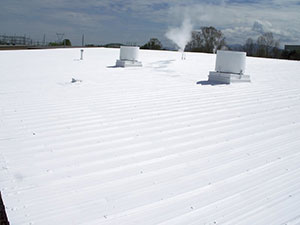
Commercial flat roofs become more vulnerable to water infiltration as membranes age, especially around seams, flashing terminations, penetrations, and areas of surface wear. Repeated thermal movement, ultraviolet exposure, and seasonal weather cycling can gradually weaken the roof’s original waterproofing barrier. Roof restoration uses a new protective surface to strengthen the existing system and close vulnerable areas before widespread water intrusion develops.
Call JM Roofing Solutions at (833) 466-5325 for roof restoration in Walker, MI.
Roof Restoration Rebuilds the Waterproofing Barrier
An aging roof can develop small gaps at seams and transitions long before a building owner sees an interior leak. These openings can allow moisture beneath the membrane, where it may spread into insulation or other components. Restoration addresses the roof from the exterior by creating a new continuous waterproofing layer across the existing surface.
Liquid-applied restoration coatings cure into a monolithic membrane, meaning the finished surface forms one continuous layer rather than leaving numerous exposed joints. The coating can cover worn membrane areas, bridge seams, and seal vulnerable transitions around roof details when the existing substrate is suitable for restoration.
Restoring Seams and Flashing Details
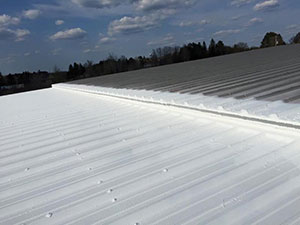
Field seams are common failure points because separate membrane sections are joined together and experience movement as temperatures change. Over time, repeated expansion and contraction can stress these joints and create openings. A properly applied restoration coating can reinforce these areas and reduce pathways for water to reach the underlying roof.
Flashing terminations and penetrations also require attention because they interrupt the main roof surface. Flashing around curbs, walls, pipes, and equipment can loosen or deteriorate after years of exposure. Restoration preparation includes evaluating these details and repairing compromised areas before the coating is applied.
Roof Restoration Requires a Sound Existing Roof
Restoration is most effective when the existing roof remains structurally sound and suitable to receive a new waterproofing layer. Active leaks, damaged membrane, and saturated insulation must be addressed before coating begins. Applying a coating over wet or compromised materials can trap moisture and shorten the life of the restored system.
Surface preparation is therefore a major part of the project. The roof needs to be cleaned, defective materials repaired, and problem areas prepared so the restoration material can adhere properly. This preparation helps the new surface perform as a waterproofing system rather than simply covering visible wear.
Extending Waterproofing with Routine Recoating
Coating-based restoration systems can provide a defined warranty period, depending on the system, application thickness, and project conditions. As that coverage period approaches its end, a compatible maintenance coat can renew the protective surface and, where applicable, extend warranty coverage without replacing the underlying roof assembly.
This recoating approach makes restoration renewable for roofs that remain suitable for continued service. Routine inspections can identify areas needing repair or maintenance before another coating application. Instead of waiting for the original restoration layer to fail, property managers can plan periodic service to keep the waterproofing barrier intact.
Roof Restoration for Long-Term Water Protection
The main value of restoration is maintaining a continuous exterior barrier between the building and weather. By addressing seams, flashing transitions, and worn membrane areas before they become widespread failure points, restoration can help reduce water intrusion risks while extending the useful service of the existing roof.
A restoration plan should begin with an evaluation of the existing roof, including moisture conditions and the state of the membrane beneath the proposed coating.
For roof restoration in Walker, MI, contact JM Roofing Solutions at (833) 466-5325 today.
FAQ
How does roof restoration improve a building’s waterproofing?
Liquid-applied restoration coatings cure into a monolithic membrane that can bridge seams, cover worn membrane surfaces, and seal prepared flashing edges. This creates a more continuous waterproofing barrier across areas where the original membrane has weakened.
Can a roof be restored if it is already leaking?
A leaking roof may still be a candidate for restoration, but active leaks and saturated insulation need to be repaired and dried first. Coating over compromised substrate can trap moisture and lead to premature failure, so restoration works best before widespread leakage develops.
How long does the waterproofing from a restored roof last?
The service period varies according to coating type, thickness, preparation, exposure, and maintenance. Many systems carry defined warranties, and compatible recoating at the appropriate interval can renew the waterproofing layer and extend coverage on a suitable roof.