
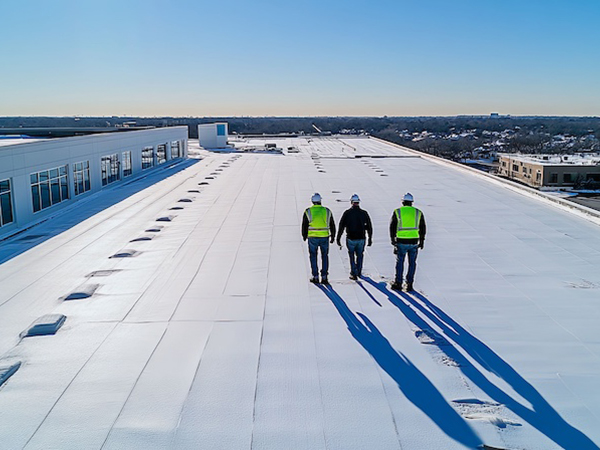
Two contractors can each propose TPO roofing for the same building and be describing very different systems. The category name is the same, but the membrane formulation, thickness, attachment and detailing can differ. A building owner in Jackson who compares only the headline benefits of TPO, or only the price, may end up with a system that does not suit the roof.
JM Roofing Solutions does single-ply roofing, including TPO, for commercial buildings in the Jackson area. This guide explains how TPO membranes vary, how to judge whether the system fits your building, and what to ask when comparing proposals. For questions about your property, call (833) 466-5325.
How TPO Roofing Membranes Vary in Quality
TPO stands for thermoplastic polyolefin, but the name covers a range of formulations that differ in polymer quality, scrim reinforcement and thickness consistency. Two membranes sold as TPO can behave differently under Michigan freeze-thaw cycling, UV exposure and thermal movement.
TPO roofing membranes are covered by ASTM product specifications, including ASTM D6878. Compliance with a specification is one part of evaluating a product; it does not guarantee service life on a particular roof. Asking for the manufacturer, the product line and the published specifications is the most reliable way to see what is actually being proposed.
Membrane Thickness Within TPO Roofing
TPO membranes are commonly sold in 45-mil, 60-mil and 80-mil nominal thicknesses. That number refers to the total thickness, but the layer that resists weathering is the top ply above the reinforcing scrim. Top-ply thickness varies by product and manufacturer, so two membranes with the same nominal thickness are not necessarily equal.
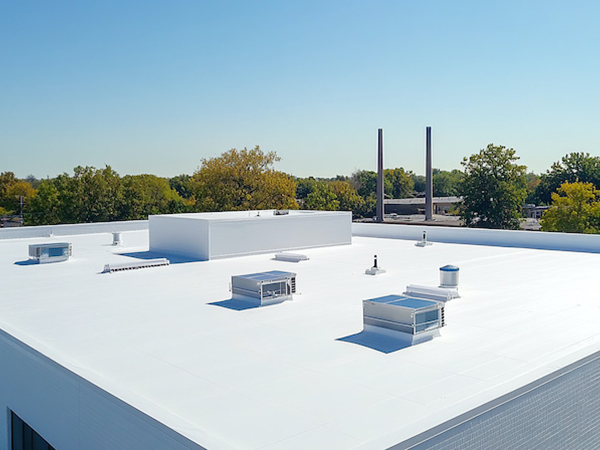
When comparing bids, ask each contractor to name the manufacturer and product, the nominal thickness and the top-ply thickness above the scrim. Thicker is not automatically better for every building, and the right choice depends on rooftop traffic, exposure and the manufacturer’s requirements for the system being specified.
Seam Quality Is Where TPO Roofing Holds
TPO seams are heat-welded, and a properly made weld is a core strength of the system. Seam quality depends on the membrane, the equipment settings and the installer’s technique, and seams can be checked using appropriate inspection and seam-probing methods once cooled. Contamination, moisture and unsuitable surface conditions can interfere with a reliable weld.
Seams, corners, curbs and penetrations are also where concentrated movement occurs, so they deserve attention in any proposal. Ask who performs the welding, how seams will be checked and what the manufacturer requires for details.
Is TPO the Right Fit for Your Building?
System selection should start with the building, not the product. The matrix below lists the factors that decide whether TPO is a good match and what each proposal should address.
| Factor | What to confirm | Why it matters |
|---|---|---|
| Substrate condition | Whether the existing deck and insulation are dry, sound and compatible with the chosen attachment method | Wet or damaged materials need assessment and an appropriate correction before a new roof assembly is installed |
| Drainage | Slope, drain locations, and any areas where water stands after rain | Standing water is a stress on any membrane, and the system needs a plan for it rather than assumptions |
| Attachment | Mechanically attached, adhered or ballasted, and the manufacturer’s requirements for the building’s wind exposure | Attachment drives uplift resistance and which details the manufacturer will accept |
| Insulation | Type, thickness, condition and any energy-code or thermal goals | Insulation affects the roof assembly’s performance more than the membrane color alone |
| Rooftop activity | Mechanical equipment, service routes and how often technicians walk the roof | Heavily trafficked roofs may need walkway protection or a more durable specification |
| Detailing | Curbs, penetrations, parapets, drains and edge metal | Leaks can occur at details, so each one needs a specified, compatible flashing method |
| Service access | How crews and materials reach the roof, and how an occupied building will be protected | Access and scheduling affect cost, disruption and safety planning |
If a building has wet insulation, serious drainage problems or damaged decking, those issues need to be resolved in the scope before any membrane is chosen. For existing roofs that are still serviceable, a repair or restoration may be worth comparing, and JM’s foam and coatings page describes acrylic and spray foam options.
Seam and Repair Compatibility
Repairs to an existing TPO roof need to be compatible with the membrane already in place. Open seams may be re-welded or patched with compatible material, but aged or contaminated surfaces must be cleaned and prepared first, and the manufacturer’s repair requirements apply. Repeated seam problems warrant investigation for contributing causes such as movement at details, inadequate original welding or unsuitable repairs. Repair scope is covered separately in JM’s commercial roof repairs page for Jackson.
What to Look for When Comparing TPO Roof Proposals
A fair comparison needs the same scope from every bidder. Before signing, verify these details:
- Manufacturer name and specific product line, not just the membrane thickness
- Top-ply thickness above the scrim and the nominal thickness
- Attachment method and whether it meets the uplift requirements for the building
- Insulation, drainage and detail work included in the price, and what is excluded
- Warranty terms in writing, including who stands behind materials and labor and any maintenance the owner must keep up
- Plans for protecting an occupied building and scheduling the work
TPO Roofing Experts
TPO is a widely used commercial membrane when it is well specified and carefully installed, but the right answer depends on the roof underneath it. Ongoing care also matters, and JM’s roof maintenance page for Jackson describes seasonal upkeep. To discuss a TPO or other single-ply project, contact JM Roofing Solutions at (833) 466-5325.
Frequently Asked Questions
What TPO roofing thickness is best for a Michigan commercial building?
It depends on the building. Different nominal thicknesses are available, and a suitable specification depends on exposure, traffic, protection measures, roof design and manufacturer guidance.
How long should a TPO roof last in Michigan?
Service life depends on membrane quality, installation, detailing and maintenance, so no single number applies to every roof. Ask for the manufacturer’s published information and written warranty terms.
Can TPO roofing be repaired if a seam opens?
Often yes. Open seams can be re-welded or patched with compatible material after the area is cleaned, but recurring failures usually signal an underlying problem that should be found and addressed.
Does TPO roofing color affect performance?
White TPO reflects more sunlight and can reduce roof surface heat in summer. Actual energy savings depend on the whole roof assembly and the building, and are not guaranteed.